
House Rewiring · Wiring Upgrades
House Rewiring in Tuscaloosa, AL
Old wiring isn't always unsafe, but wiring that's overheating, ungrounded, damaged or simply overwhelmed by modern loads is a problem worth fixing properly. Next Electrician Tuscaloosa handles whole-house and partial rewiring for older homes and rental properties across Tuscaloosa and Northport.
- Residential & commercial
- 24/7 emergency calls
- Tuscaloosa, Northport & nearby
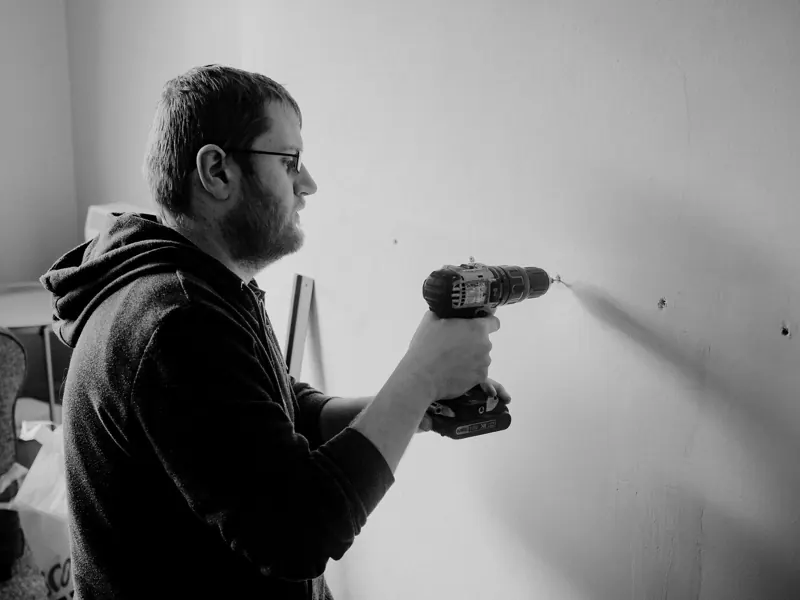
Signs your home needs rewiring
- Breakers trip or fuses blow often on several circuits, not just one
- Outlets and switches feel warm, look discolored or have a burning smell
- Lights flicker in several rooms, not just one fixture
- Mostly two-prong outlets, or three-prong outlets that test as ungrounded
- Cloth-covered or brittle, cracking insulation where wiring is visible in the attic or basement
- Knob-and-tube wiring or aluminum branch-circuit wiring
- Earlier owners' DIY work: splices outside boxes, mismatched wire, extension cords stapled along walls
- An inspector or insurer has flagged the wiring
Wiring types in older Tuscaloosa homes
Tuscaloosa's housing ranges from older homes near downtown and the university to newer subdivisions, and the wiring varies with it.
Knob-and-tube
Found in the oldest homes. It has no ground wire, its insulation becomes brittle with age, and it was never meant to be buried in attic insulation. Many insurers won't cover homes that still use it.
Ungrounded cable (two-wire NM)
Common in mid-century homes. It works, but it has no equipment ground, so outlets can't be properly three-pronged without adding a ground or GFCI protection. It's worth checking for heat damage at fixtures.
Aluminum branch wiring
Used in some homes built in the late 1960s and 1970s. The problem is at the connections, where aluminum can loosen and overheat. It can be addressed by repairing connections with approved connectors rated for aluminum and copper, or by replacing circuits.
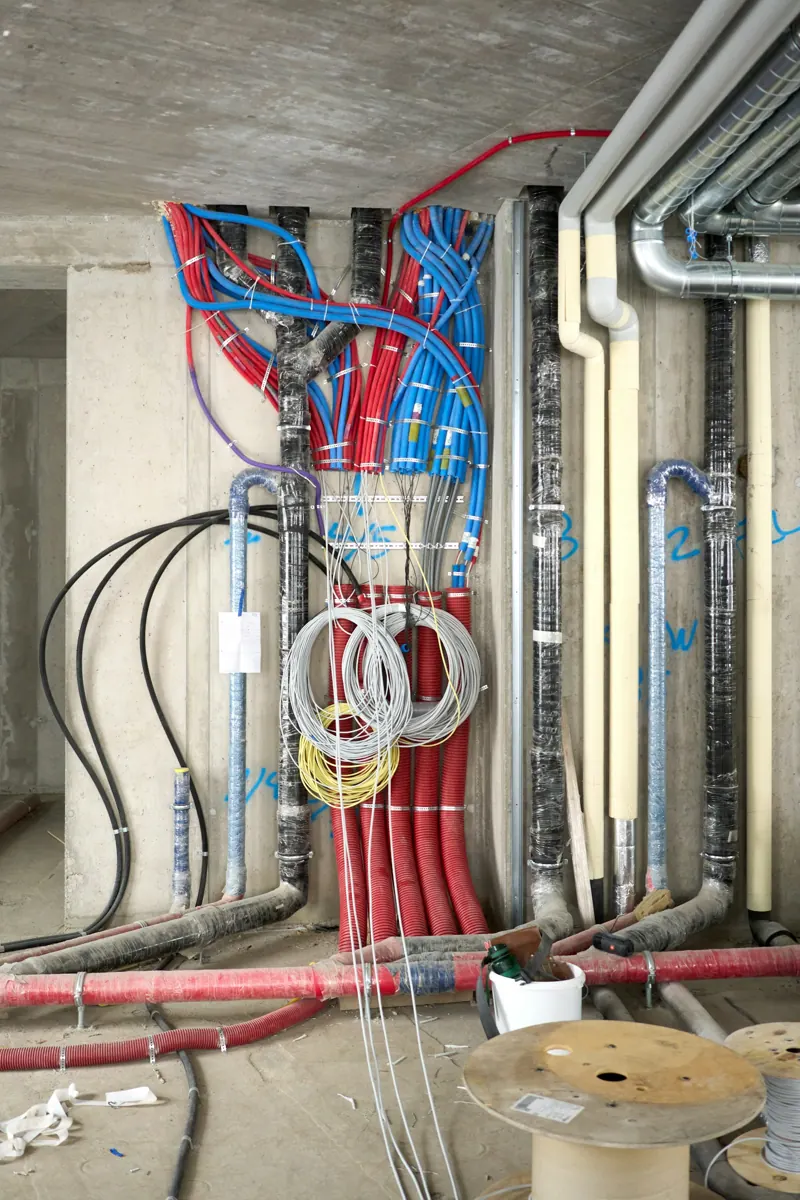
Full rewire, partial rewire or repair?
Not every old house needs a full rewire. We'll recommend one of three approaches:
- Targeted repair: fix damaged sections and failed connections, add grounding and GFCI protection where needed. This works when the wiring is mostly in good shape.
- Partial rewire: replace the worst circuits, often the kitchen, bathrooms, laundry and anything on knob-and-tube, while keeping sound circuits.
- Full rewire: replace all branch circuits, usually together with a panel upgrade. This makes sense when the wiring is failing throughout or a major renovation is already opening walls.
We'll explain why we're recommending one over the others, so you can make the call.
What rewiring involves
Rewiring an occupied home is very doable. Most of it is done through attics, crawlspaces and small access openings rather than by gutting walls. A typical project is phased room by room so you keep power to the rest of the house each night. Expect some small drywall openings that need patching and painting. We'll talk about who handles patching before the work starts. Furniture needs to be moved away from walls in the rooms being worked on.
Staying safe until the work is done
If you're planning a rewire but not starting right away, a few steps reduce the risk in the meantime. Don't overload circuits you already know are weak. Unplug space heaters and other heavy loads when you're not using them. Keep insulation and storage away from any exposed knob-and-tube wiring in the attic. Test smoke alarms. Call right away if you notice heat, buzzing or a burning smell at any outlet or switch.
Permits and inspection
Rewiring involves running new circuits, which the City of Tuscaloosa lists as work requiring a permit. There is a rough-in inspection before walls are closed and a final inspection at the end. Northport and county properties follow those jurisdictions' rules. The new wiring will meet current code, which usually means grounded circuits and AFCI and GFCI protection where required.
Rewiring rental houses
Tuscaloosa has a lot of older homes rented to students and families, and rentals are often where outdated wiring hangs on longest. The best time to rewire a rental is between leases, when the house is empty and the work can move quickly. If you manage several properties, we can start with an electrical inspection of each one and rank the work by urgency so you can plan the budget across turnovers.
What affects rewiring cost
- House size and number of circuits
- Access: open attic and crawlspace or slab and finished basement
- Construction: plaster walls, brick and finished ceilings take more labor
- Scope: targeted repair, partial or full rewire
- Panel: whether a panel upgrade is part of the job
- Wall repair and occupied versus vacant home
Project Gallery
Electrical work examples: photos of the kind of wiring and rewiring work this page covers. They are illustrative and are not presented as specific local jobs, customers or locations.
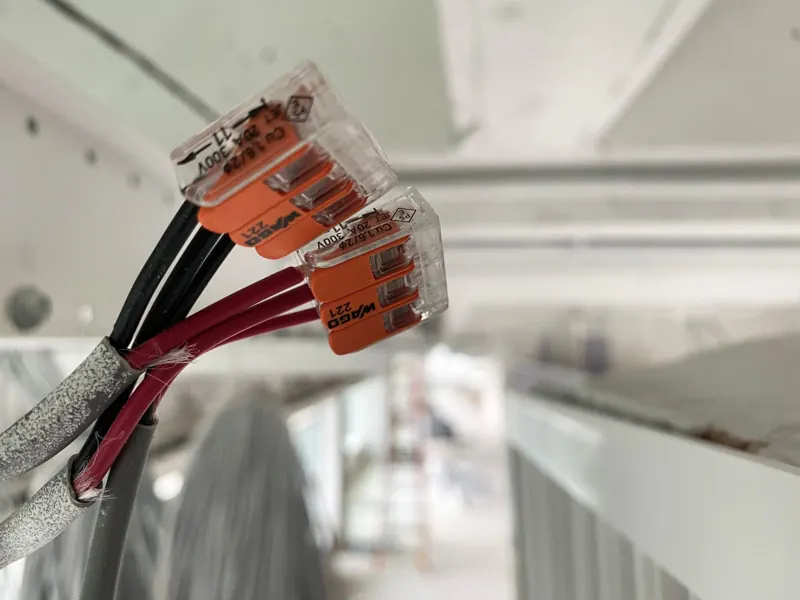
Modern splicing connectors on a branch circuit. 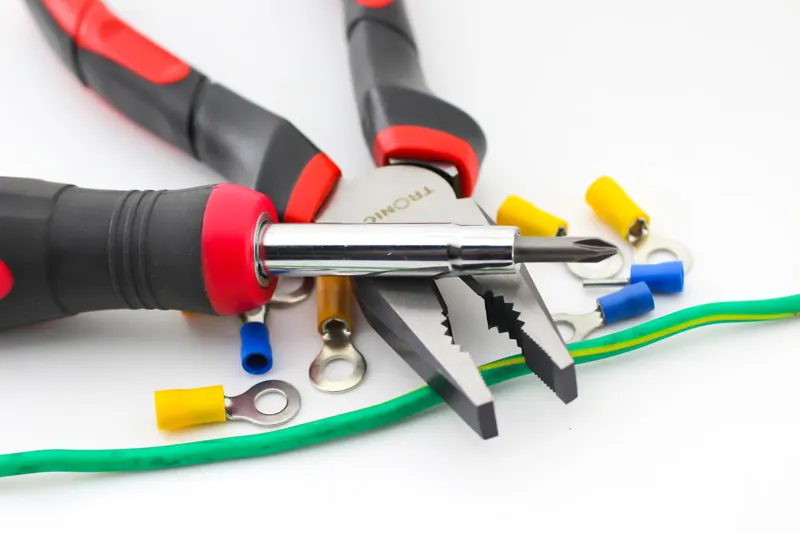
Hand tools used for stripping and terminating wire. 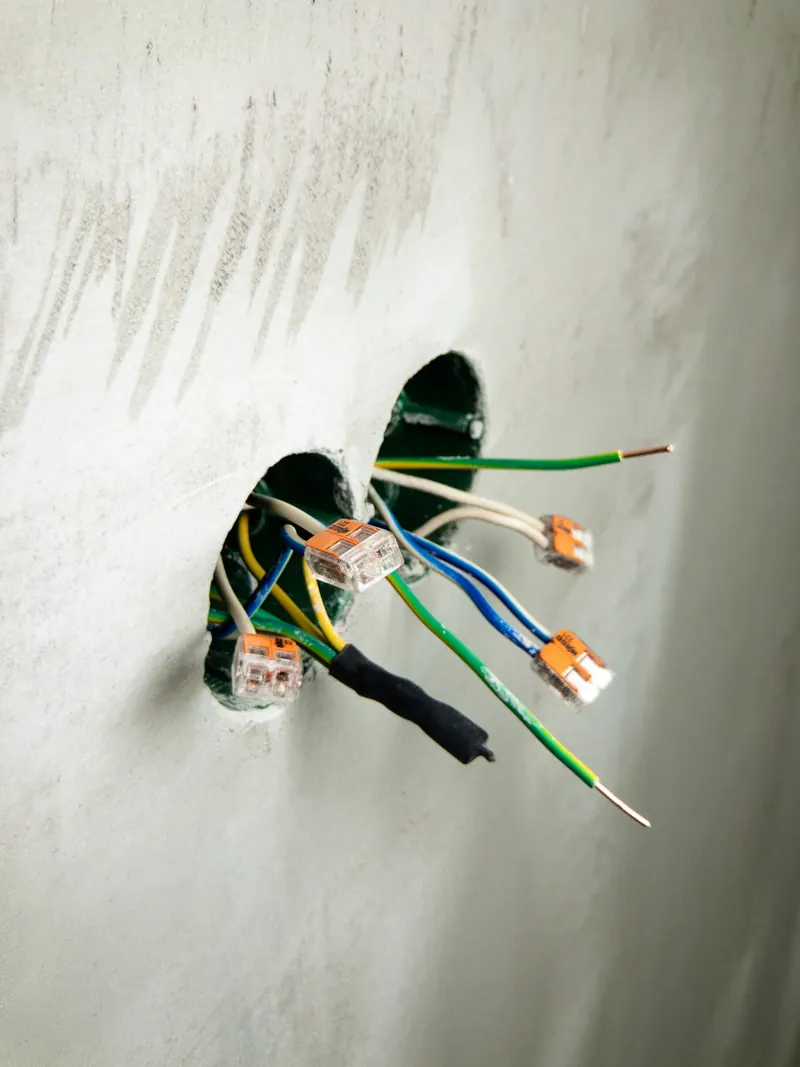
Conductors in a wall box made up with lever-style connectors.
Frequently asked questions
How do I know if my house has knob-and-tube or aluminum wiring?
Look in the attic or basement. Knob-and-tube has single wires on ceramic knobs and through ceramic tubes. Aluminum wiring is silver-colored and usually marked "AL" on the cable jacket. When in doubt, an electrician can confirm it during an inspection.
Can I stay in my house while it's rewired?
Usually, yes. The work is phased so most of the house has power at night. Expect noise, dust in the rooms being worked on and some access openings.
Do I need to rewire to get three-prong outlets?
Not always. The NEC allows a grounded replacement where a ground can be added, or a GFCI-protected three-prong outlet labeled "No Equipment Ground" on an ungrounded circuit. See outlet repair.
Does rewiring require a permit in Tuscaloosa?
Yes. It involves running new circuits, which the City of Tuscaloosa lists as permit work.
Worried about old wiring? Call for an honest assessment.
Call and talk it through. Emergency calls are answered 24/7.
Call +123456789